
Risk of electric shock through poor socket selection

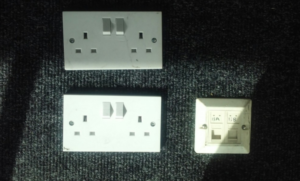
Risk of electric shock through poor socket selection, in this example standard plastic electrical socket outlets have been fitted in an office floor

It seems quite obvious that if an electrical socket is to be fitted into the floor, it would need to be of a type that has been designed to withstand weight or impact, however someone has ignored this criteria, or has not considered the environment.

A standard plastic electrical socket outlet is designed to be mounted into a wall and would not be suitable to floor mount. The sockets in this photo would easily be broken by; the steel chair leg where the leg could become live through direct contact with the live electrical conductors.

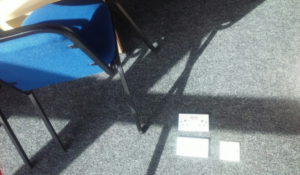
This example was identified by a Veriserv engineer whilst carrying out an electrical fixed wiring inspection and test. The engineer would isolate the sockets and complete an “immediate report” to notify Veriserv’s customer.
The sockets should be of the type that are enclosed in a protection enclosure suitable for use on an office floor. This type of socket would normally have a lid to stop ingress of liquids should they get spilt.

Electrical equipment that is intended for use in the workplace must satisfy the safety requirements of  the  Electrical Equipment (Safety) Regulations 1994  and  must  provide  a  safe connection to the mains electrical supply.

The Institute of Engineering and Technology (IET) publish BS7671, IET wiring regulations seventeenth edition. Section 522.6.2 states that wiring systems shall be selected and erected so as to minimise damage arising from mechanical stress or impact during use or maintenance.

Veriserv would be happy to advise on any electrical compliance matter, or provide you with a quotation to carry out an Electrical Fixed wiring inspection and test of your premises.

Please contact us on 01543 225306 or complete our on line enquiries form.
 

Portable Appliance Testing why do it

Portable Appliance Testing why do it , In the work place all portable electrical equipment should be subject to ‘User Checks’ carried out by a competent person. As an employer its very important to protect people in premises that you control from electric shock, fire and other hazards. Its also very important to protect yourself and your company from prosecution should an accident occur which is not your fault.

The examples shown in this blog were all identified by Veriserv engineers and demonstrate how your employees could negatively effect safety in your workplace. In other words, employees who ignore the basic principles of electrical safety could land you and others in trouble.

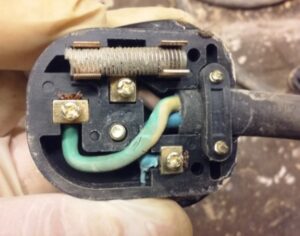
The first example of portable appliance testing why do it, shows a standard 13amp plug where the fuse has been replaced with a peace of metal bar. A correctly rated fuse will blow if the portable appliance develops a fault. This in turn protects the user from potential electric shock and would prevent the possibility of the appliance overheating and causing a fire.

Someone has deliberately replaced the fuse with the bar which is totally irresponsible, given that the appliance is no longer protected at the rated 13 amps. Given the size of the cables it may be that the appliance itself should be connected by a different means to a 13 amp plug. A competent portable appliance test engineer will check ratings and advise accordingly and a veriserv engineer would also disconnect the appliance and issue an immediate report to advise our customer.

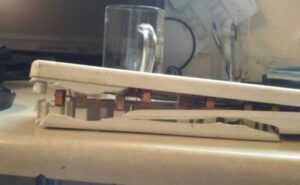
This second example was found plugged in and switched on with live conductors showing.


Again this is an example where it would be clear to a responsible person that this extension lead is not fit for use.

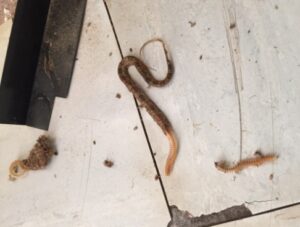
The third example is another broken extension lead being used in service which clearly exposes people to an electric shock hazard.

Both faults were found by Veriserv engineers during annual portable appliance testing (PAT) and these examples reinforce the importance of maintaining a proper testing regime to protect people in your premises.

Ideally, equipment which has an obvious visual fault should be switched off and taken out of service by an employee or person acting responsibly in the workplace. Only very basic health & Safety training is required to achieve this.

In any event, in the workplace it should not be acceptable for a defect to go unnoticed, therefore the Institute of Engineering and Technology (IET) recommend that formal visual inspections are undertaken periodically by a competent person to identify these hazardous items.

All Veriserv PAT engineers are qualified to the City & Guilds 2377 Level 3 award in the in service inspection and testing of electrical equipment (PAT)

If you need advice on Portable Appliance Testing please feel free to request a quotation or call Veriserv directly on: 01543 225306.

Useful References:

The Institute of Engineering and Technology (IET) publish guidance for the maintenance of portable appliances

The Health & Safety Executive (HSE) provide useful guidance on Portable Appliance Testing

IET Code of Practice for In-service Inspection and Testing of Electrical Equipment Chapter 15.8

Provision & Use of Work Equipment Regulations 1998 Regulation 5
The Electricity at Work Regulations 1989, Regulation 4(1)

If you need advice on Portable Appliance Testing please feel free to request a quotati

Portable Appliance Testing, Overheated Plug Socket

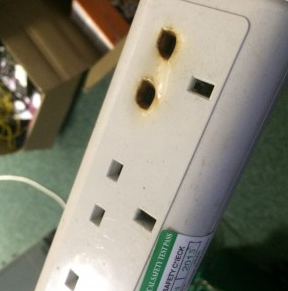
One good reason to have your portable appliance testing (PAT) carried out. Our fault of the week is a good example of a multi socket electrical extension lead that has become overheated with early signs of burning.

This fault was found by a Veriserv engineer during an annual portable appliance test (PAT) . The socket has become overheated. This could be caused by a loose connection or as a result of supplying an appliance which uses power in excess of the extension leads recommended maximum limit. Most extension leads of this type are rated at 13 amps so this means you should not plug more than one 13amp appliance into the extension socket at the same time. Multiple appliances should be rated at 5 amps.

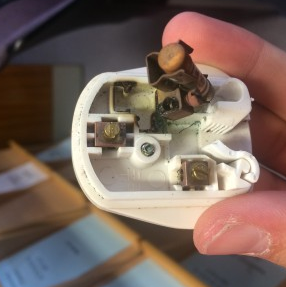
The plug which connected to the overheated socket is shown below.

It is important that all appliances are fitted with a fuse which is correctly rated for the appliance it powers. A new portable appliance will already be fitted with a sealed plug and correctly rated fuse. The plug shown in this photo is the type that has probably been fitted at a later date. It is important that the fuse rating is checked during the portable appliance test. Veriserv engineers would check this during the test and replace if necessary.

As a result of the PAT test by Veriserv the overheated extension lead and plug would be taken out of service and reported immediately to our customer.

In the work place all portable electrical equipment should be subject to  ‘User Checks’ however in this case it seems the deterioration of this piece of equipment has gone unnoticed. Ideally in this situation, as soon as any damaged is noticed the piece of equipment should be switched off and taken out of service.

In any event, in the workplace it should not be acceptable for a defect to go unnoticed, therefore the Institute of Engineering and Technology (IET) recommend that formal visual inspections are undertaken periodically by a competent person to identify these hazardous items.

All Veriserv PAT engineers are qualified to the City & Guilds 2377 Level 3 award in the in service inspection and testing of electrical equipment (PAT) 

If you need advice on Portable Appliance Testing please feel free to request a quotation or call Veriserv directly on: 01543 225306.

Useful References:

The Institute of Engineering and Technology (IET) publish guidance for the maintenance of portable appliances

The Health & Safety Executive (HSE) provide useful guidance on Portable Appliance Testing  

IET Code of Practice for In-service Inspection and Testing of Electrical Equipment Chapter 15.8

Provision & Use of Work Equipment Regulations 1998 Regulation 5
The Electricity at Work Regulations 1989, Regulation 4(1)

If you need advice on Portable Appliance Testing please feel free to request a quotation or call Veriserv directly on: 01543 225306.

Overheated RCBO terminals could cause a fire

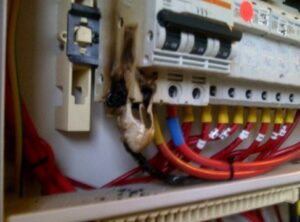
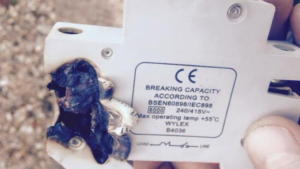
Our “fault of the week” blog posts are all real electrical fault situations that have been reported by Veriserv engineers whilst carrying out Inspection & Testing of electrical installations at client sites. This fault is an RCBO (residual current breaker with overcurrent) that has become overheated and burnt.

This C1 electrical defect is a result of a loose connection causing arcing at the RCBO terminal. Not only would this lead to a failure in the RCBO and electrical circuit, there would also be a serious threat of fire should the melted plastic ignite in some way.

The Veriserv engineer would immediately isolate this circuit and report the defect to the client on what we call an “immediate report”. This so the client is aware of any defects prior to the engineer leaving site. The RCBO and adjoining cable would be replaced if the client requested that Veriserv carry out the remedial repair.

Overheated RCBO terminals could cause a fire, this fault would be classed as a C1 Fail Code -Danger Present. Risk of injury. Immediate remedial action required.

The Electricity at Work Regulations 1989-Reg 4(2) state “The need for maintenance to be done to ensure safety”.  As such all commercial premises must be electrically tested and certified to ensure they can continue to be used safety.

BS7671 wiring regulations to the latest edition sets out the requirements for all electrical installations in the UK. The Institute of Engineers and Technology (IET) produce guidance notes to enlarge on the wiring regulations and set out guidance on how compliance can be achieved. Guidance Note 3 covers the Inspection & testing of Electrical Installations.

An electrical installation should be periodically inspected by a qualified electrical engineer. Veriserv are experts in this field and will advise any customer who may be unsure of the periodicity or scope of the Inspection & Test. Veriserv will issue an electrical certificate and report to their customer with a statement as to the condition of the electrical installation. Click here for more details.


Veriserv extends its services to testing in Compex Explosive Atmospheres

Veriserv would like to congratulate their engineers on the successful completion of the competence validation tests in relation to CompEx. Meaning Veriserv can now test in explosive atmospheres

explosive atmospheres compex

Veriserv’s Senior Electrical Inspection & Testing engineers have extended their qualifications by completing and passing the new modules in Compex environments. The extension to Veriservs’ range of services is specifically for clients who work in areas that contain explosive atmospheres, for example; Gas refineries, petro-chemical, distilleries, pharmaceutical and a wide range of other gas industries.

Our engineers have successfully passed the following units:

EX01  Preparation & Installation of Ex’d’, ‘n’, ‘e’ and ‘p’ electrical equipment

EX02  Maintenance & Inspection of Ex’d’, ‘n’, ‘e’ and ‘p’ electrical equipment

EX03  Preparation & Installation of Ex’i’ equipment and systems

EX04  Maintenance & Inspection of Ex’i’ equipment and systems

All units are based on the IEC Standards 60079: Parts 14 & 17 and the APEA/IP Guide as appropriate 

explosive atmospheres engineer testing

The CompEx Scheme is now the global solution for validating core competency of employees and contract staff of major users in the gas, oil and chemical sectors.

Veriserv are delighted with their engineers achievements and through CompEx, look forward to extending our range of services for clients who operate in environments with explosive atmospheres.

As more companies are required to comply with the ATEX Directive to meet European legislation, Veriserv are perfectly positioned to offer ATEX advice, assessment and certification of your electrical installations.

Our services also include electrical inspections of work carried out by your contractor ensuring compliance to current requirements and regulations.

For more information or a quotation please click here   

Fuse replaced with steel rod – Portable Appliance Testing

This fault of the week underlines the importance of carrying out Portable Appliance Testing.

When a fuse blows you often find yourself hunting around for a suitable replacement. Unfortunately, in this instance, a fuse was not available so an enterprising individual prepared one from a steal rod. It may have even been turned down on a lathe such is the perfect fit!

For the purpose of protecting the appliance and the user in the event of an electrical fault, this item is obviously unsuitable, meaning not only your electrical appliance breaking, but there is a huge potential of a fire risk. Is it really worth it?

All users of portable electrical equipment in the work place should undertake ‘User Checks’. However for non-trained personnel it is recommended that the plug top is not removed.

Unfortunately, this limited inspection may lead to a significant defect of this nature going unnoticed. Therefore the IET recommend that formal visual inspections are undertaken periodically by a competent person to identify these hazardous items.

A Veriserv engineer would replace the fuse during the Portable Appliance Testing and advise the client of his findings. Keeping both the client, and all those around the electrical item, safe and sound.

Our mission is to provide every single customer with an outstanding service that is fit for purpose and delivered by experts to reduce risk. As you can see from our other faults of the week, regular visits from a professional can cut down the risk of electrical faults, fire and disrupted security, to you and your workplace.

So if you know you are due a service, or have some concerns about your premises, please call 01543 225306, or fill out one of our contact forms to arrange a free assessment of your premises, with one of our fully trained engineers.

Information for Reference

IET- Institution for Engineering Technology

Regulations

Provision & Use of Work Equipment Regulations 1998

Electricity at Work Regulations 1989


Damaged Conduit exposing live electrical connections

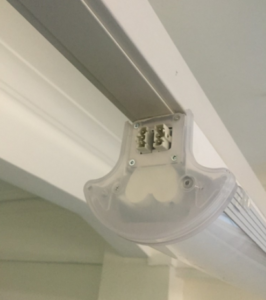
In this weeks fault of the week, we are looking at a damaged conduit exposing live electrical connections.

In this electrical fault, we have a plastic conduit, which is exposing live electrical connections that has been damaged and pulled away from its fixing,  which has exposed connections.

This was found in a public area and the loose cables could easily be accessed, pulled and detached, which would allow live terminal or cable ends to be freely exposed.

During an Electrical Tests and Inspection, this would be categorized as a fault requiring immediate attention. We would notify our client with an immediate report, then carry out an immediate repair, or make safe. Check out our Electrical Inspection and Testing Service.

Our mission is to provide every single customer with an outstanding service that is fit for purpose and delivered by experts to reduce risk. As you can see from our other faults of the week, regular visits from a professional can cut down the risk of electrical faults, fire and disrupted security, to you and your workplace.

So if you know you are due a service, or have some concerns about your premises, please call 01543 225306, or fill out one of our contact forms to arrange a free assessment of your premises, with one of our fully trained engineers.

Poor electrical connections cause overheating

In this week’s fault of the week, we look at the dangers of poor electrical connections that could cause overheating.

Poor electrical connections have caused internal overheating and burning within a distribution board. This is a major fire risk which could have been prevented with routine electrical testing.

If this distribution board had been tested on a regular basis, melting and overheating would not have occurred, this is because during the test and inspection process all cable connections would have been tightened.

Please keep yourself and others safe by regularly testing your electrical installation, as simple as tightening some wires could save a life.

Our mission is to provide every single customer with an outstanding service that is fit for purpose and delivered by experts to reduce risk. As you can see from our other faults of the week, regular visits from a professional can cut down the risk of electrical faults, fire and disrupted security, to you and your workplace.

So if you know you are due a service, or have some concerns about your premises, please call 01543 225306, or fill out one of our contact forms to arrange a free assessment of your premises, with one of our fully trained engineers.

Electrical Faults of the Week by Veriserv Limited

Today, here at Veriserv Ltd,  we are starting a new series of blogs we call “Fault of the Week”.

Our engineers are continuously testing the Electrical Installations of commercial properties, in order to make sure our clients comply with the current Electrical Safety Regulations. During this testing we find many electrical faults which could potentially cause a fatal electric shock to an employee, or member of the public. We thought it would be a good idea to share examples of these faults so others can see the type of issues they may have at their own premises. Don’t worry, we won’t be publishing any information relating to where the photos were taken. The idea behind “fault of the week” is that we may be able to help prevent an injury or even save a life, by helping to bring attention to some of these dangerous faults.

It’s surprising the amount of faults that go unnoticed in many business environments, do you know of any where you work? Look out for the daily update as we highlight “faults of the week” in our blog and please report any you find to your business managers and help us all remove risks

Here are the first two faults;

Damaged isolator for a lamppost located in busy car park where members of the public are in close proximity. Live connections inside which could be accessed along with water ingress also causing an issue. A member of the public could easily get their fingers onto live conductors causing an electric shock.

In this photo a socket has come away from the damaged trunking, exposing the connections of the socket in a shop store room. This is a serious danger to store workers using this room. We can see a portable appliance test label on the power supply plug, showing that it was tested some time ago, therefore the installation has since deteriorated. Also notice the untidy cables which in themselves are a safety hazard that should be tided and fastened to stop potential trip and electrical failure.

Our mission is to provide every single customer with an outstanding service that is fit for purpose and delivered by experts to reduce risk. As you can see from our other faults of the week, regular visits from a professional can cut down the risk of electrical fires and risks to you and your workplace.

So if you know you are due a service, or have some concerns about your premises, please call 01543 225306, or fill out one of our contact forms to arrange a free assessment of your premises, with one of our fully trained engineers.